
Factories are becoming smarter as manufacturers rely more on connected devices and big data to improve efficiency and effectiveness. With that said, end users and installers need to stay on top of the latest trends in industrial automation technology.
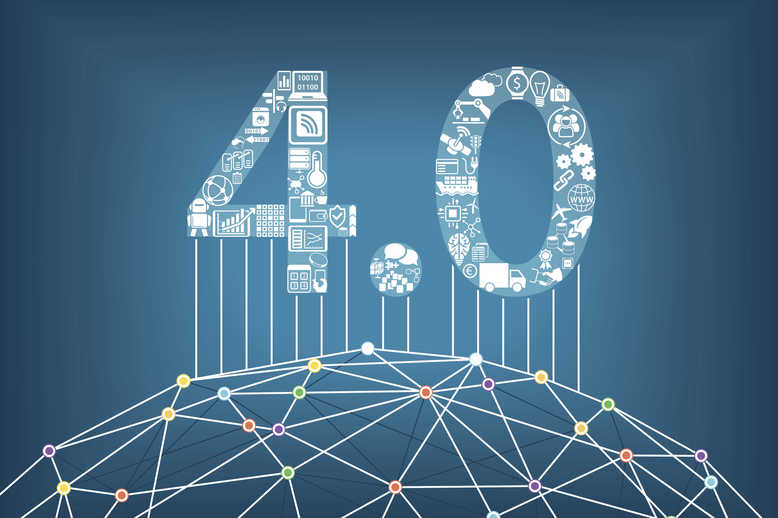
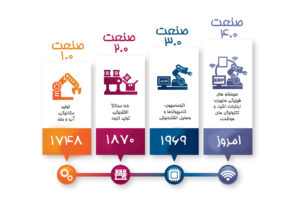
Industrial automation has become a hot topic among manufacturers. These manufacturers are looking to improve their production line operations and efficiency with the help of IoT devices and the data generated by these devices, also known as the Industrial Internet of Things (IIoT) or Industry 4.0. The Industrial Internet of Things (IIoT) is being called the fourth industrial revolution after the changes – such as machines and production lines – that have transformed the manufacturing industry over the past decades.
New technologies in the field of industrial automation are creating opportunities for manufacturers around the world. With the help of digitalization and IoT technology, industrial automation has become a competitive advantage in today’s industrial landscape. Because by integrating and integrating these systems, automated production becomes reliable, efficient, transparent and predictable. This is precisely the core of IIoT technology and the promise of industrial automation.
In the following, four future trends in industrial automation will be discussed and explored.
Improving Accuracy with Machine Learning
Over time, artificial intelligence (AI) and machine learning have found their way into smart factories. For example, in the field of quality control, a system that uses images of defective goods can be trained to detect defective goods on its own using this technology.
More importantly, changing customer demands and their need for customization pose challenges for manufacturers. In this context, manufacturers can rely on machine learning. Manufacturing units can also use data analytics and machine learning to improve their processes. These systems help people predict yield rates at different levels of the supply chain, thereby reducing raw material costs and maintaining the quality of their brand. In addition, AI helps in real-time operational intelligence and supports product lifecycle management, which includes process integration, automation and collaboration issues, review and diagnosis.
Digital Twins and Industrial Automation
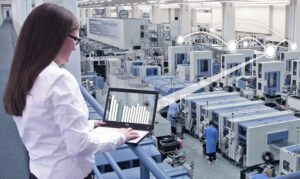
Digital Twins allow you to create a virtual copy of a machine or system. This process not only reduces the dependency on expensive prototypes, but also speeds up time to market. Digital twins are already in operation in factories, analyzing production efficiency and enabling predictive maintenance. Predictive maintenance is maintenance in which the occurrence of equipment failures is predicted using non-destructive techniques (fault detection methods) and the upper and lower limits of the required indicators for each technique. In the future, manufacturers will be aware of all the components installed in their products and can thus respond to problems in a targeted manner and optimize existing processes.

Industrial Cybersecurity Advances
Since IIoT devices are essentially connected devices, they are at risk of cyberattacks just like any other networked device. Therefore, securing these devices has become very important. The advanced industrial cybersecurity solutions available today take an efficient hybrid approach. This hybrid approach includes behavior-based anomaly detection, which works with traditional cybersecurity approaches to identify potential cyber threats. Rule-based analytics is another part of this hybrid approach, allowing manufacturers to perform deep inspection to detect malicious cyberattacks on the network.
Augmented Reality (AR) and Virtual Reality (VR)
Augmented reality (AR) and virtual reality (VR) technologies are being used in a variety of fields, from their applications for consumers to manufacturers. In the field of industrial automation and manufacturing, virtual reality technology can help manufacturers to digitally simulate a product or environment. This allows consumers and manufacturers to interact with these simulated products and spaces. Augmented reality (AR) technology allows industrial users to bring their digital products or information into a real space. This is much more efficient than simply inserting digital products or information into a digitally simulated space (as happens in virtual reality technology).
The Rise of Intelligent Industrial Robots
Ultimately, the increasing presence of intelligent industrial robots on factory floors is a triumph for the Fourth Industrial Revolution. Although manufacturers have been using robots for decades, the continuous advancement and development of robotic technologies has undoubtedly broadened the potential applications of intelligent industrial robots. Today, robots with the most advanced software and vision systems can be programmed to perform a set of specific tasks, which is well suited to the demand for intelligent manufacturing.
From a&s magazine