


COVID-19 has forced many tech companies around the world to focus on providing contactless solutions. In the security industry, these solutions include products such as facial recognition-enabled access control systems, mobile authentication, and more. But such systems only make up a small part of a building.
How do you turn an entire building into a completely contactless place? Or a place where contact is used as little as possible? In this article, we will explore various technologies that are currently available that can help provide a completely contactless experience.
Help customers without calling.
More alertness about touching surfaces
The technology for creating frictionless, touchless experiences in buildings has been around for a while, but over the past year, interest in the technology, as well as the potential for its implementation, has grown significantly.
Three factors have fueled the growing interest in this type of technology:
- increased awareness of the dangers that are not visible to the eye,
- increased demand from building occupants to experience wireless and automated systems,
- increased access to smartphones.With the coronavirus pandemic, people are more aware than ever of their surroundings and how they interact with them. People are now more mindful of the number of surfaces they typically touch to enter and exit a building. For example, to enter a workplace, our hands touch parking lots, doors, and elevators, to name a few.
As building occupants continue to prioritize touchpoints or their desire for customized, automated experiences increases, building owners and managers should consider implementing more contactless solutions that enhance the occupant experience while also ensuring safety and building operations.
Getting started with entry and exit points
Let’s start with the most obvious solution. A contactless building is one where employees, visitors, or anyone else who enters the space does not have to physically engage in the security steps of an access control system.
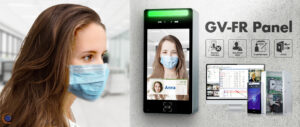
This means there is no need to use a key card or enter a personal identification number (PIN) into a device – anything that requires people to touch surfaces. One alternative to these older access control systems is smart cameras equipped with facial recognition technology; these systems screen employees and visitors entering the workplace, allowing users to enter a building seamlessly without having to touch anything.
.
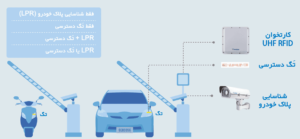
Additionally, the system can be deployed outside a building. Contactless buildings can use license plate reader (LPR) systems in adjacent parking garages, making parking completely automated and allowing users to enter and exit without any contact or obstacles. Computer vision technologies are one of the solutions that are helping to accelerate the digitization of parking lots; with the help of these technologies, the need for paper ticketing systems, parking barriers and other physical factors in commercial parking lots will be eliminated. These solutions will undoubtedly increase demand, as they create much healthier and safer buildings and provide a more optimal experience for customers and employees.
Once entry and exit points are operational, building designers and operators can use smart cameras to look for ways to automate other potential touchpoints in a building. The data collected can be used to assess potential needs for further hygiene measures, such as determining how often workspaces and other areas should be cleaned and disinfected.
From contactless access to contactless buildings
Opening a door, accessing an elevator, turning on the toilet, and even applying hand sanitizer can all be done easily and without the need for physical contact.
But to achieve a completely contactless building, the use of technology must be extended to other areas:
- Creating the ability to use smart hub functionality,
- apps to control electric blinds, ambient temperature, lighting, and food service, and perhaps even adjusting the projector or conference room monitor for a remote team meeting based on the user’s preferences, whether previously identified or newly learned.
- Automated robots are also an efficient means of automating things, which can be part of reducing the need for human contact.
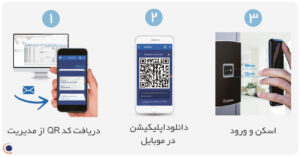
Self-service guest/visitor management systems are also a great way to reduce contact with guests who have come from outside. Using a digital device in the lobby with pre-generated, contactless QR codes, guests can self-check in, print a temporary identification number, and use the guest management system to notify their host of their presence.
Result
Contactless solutions are no longer limited to access control systems. Solutions range from smart hubs to autonomous robots; solutions that can completely eliminate contact and touch in a building.
But how effective these measures are depends on the type of use a building has and the individual needs of the people present. For example, consider a company whose employees must arrive on the production floor on time to start a new shift; a contactless method can be a valuable time-saver, especially if mobile phones are prohibited in the production area.
Source: a&s magazine