

Visitor management systems are playing a much bigger role in the post-COVID era. Now, these systems include features that ensure the safety and general well-being of the user’s premises. Additional issues such as security and privacy also need to be considered by users.
Even before the coronavirus outbreak, visitor management systems had become a common visitor management tool. These systems replace paper and pen reports, which can deliver visitor data illegible. These systems allow visitors to pre-register and automatically enter the premises; their footprints can be tracked for security reasons in the building.
Now, in the post-COVID era, when businesses are back to business, visitor management systems are playing an even more important role. Visitors who are sick should not be allowed in. Social distancing and other rules should be observed when more visitors enter the user’s premises.
With this in mind, users are turning to visitor management systems that are now offering a variety of new and advanced features to meet the post-COVID-19 needs of users. Change is the only constant in life, and this has been especially true in the visitor management space recently. It’s encouraging to see businesses with similar approaches offering features focused on this contagious virus; features that provide much deeper value to employees and have become an employee’s go-to tool.
The question now is, how can today’s visitor management systems (VMS) help meet the post-COVID-19 needs of users? These issues are explored further in this article.
1. Facilitate health checks for individuals

Visitor management systems ensure that the health screening of guests begins well before they arrive. It is best to send pre-registered visitors a health screening questionnaire before they arrive. The visitor management system should be based on reasoning that automatically allows or denies entry based on the visitors’ answers.
Within the building itself, additional screening and monitoring systems can be integrated with the visitor management solution to prevent entry by high-risk guests. Today’s visitor management systems are integrated with hand-held thermal scanners to detect body temperature without any contact. The recorded temperature of the visitor is automatically sent to the visitor management system to allow or deny entry.
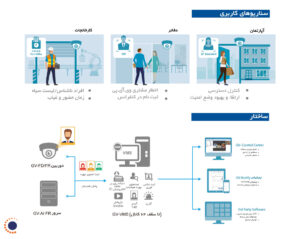
Customers are using a combination of the following measures to manage their health screening and monitoring needs:
- Pre-registration
- Temperature screening and monitoring upon entry
- Contactless QR codes
Ensure that entry points offer options such as contactless kiosks, QR code scanning, or other measurement tools such as facial recognition systems. Kiosks can provide a great way to display additional health information and instructions.
2. Ensuring social distancing

As more visitors arrive, it can become more difficult to maintain social distancing guidelines. A visitor management system can help address this. Modern visitor management systems should support an “invite first” approach, limiting entry to only those who have been properly screened, while maintaining occupancy thresholds that can be set to manage the number of people in a space to reduce overcrowding and ensure social distancing.
Visitor management systems may also incorporate features such as hot-desking and capacity alerts to ensure that people are kept a safe distance apart. By changing office rules, these systems can easily add or remove the number of desks available in each office space. This limitation allows office managers or facility owners to keep a space safe without worrying about overcrowding or the spread of the virus due to lack of space.
Taken from a&s magazine