
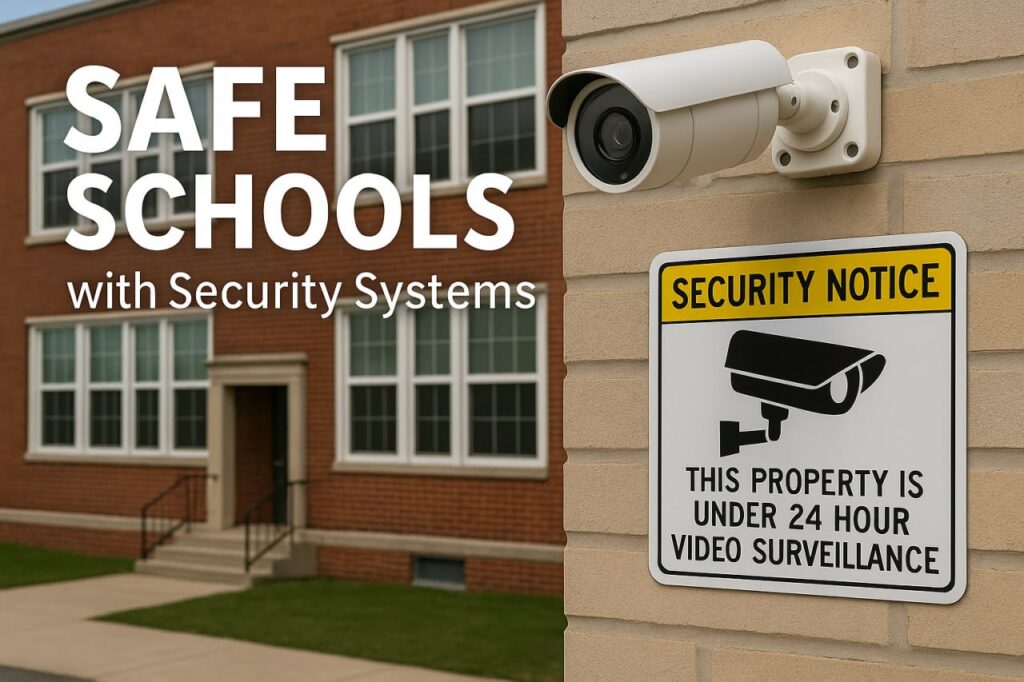
Safe Schools, with Security Systems
A major challenge facing school administrators is obtaining the right information on how to create security. Limited school budgets and the lack of dedicated resources to manage security systems force administrators to adopt cost-effective solutions that are easy to install, use, and maintain.
Where to start?
The first step in setting up a security program and selecting the right systems is to map out and understand the threats and needs ahead. It is recommended that you first conduct a threat assessment, look at the information, and see what is happening in that area, city, province, etc. After that, depending on the environmental conditions, you can start focusing on a series of specific issues.
Using Legacy Systems
Since the budget issue is a serious constraint for schools, ensuring that legacy systems are fully implemented is a smart recommendation. With this in mind, it seems that with a cost-conscious approach, schools can make the most of their existing assets and infrastructure.
Schools can leverage existing investments in legacy analog systems while migrating to more modern IP systems using encoders; this will allow for the integration of network cameras with existing systems.
More than just security
One way to get the most out of school security systems is to turn them into “dual-use” systems. IP cameras in schools offer more than just security for schools and parents; with these cameras, parents can see how their children are interacting in class, and school administrators can remotely monitor and supervise classes without their physical presence in the classroom disrupting the normal way lessons are delivered.
Resistance to Security Systems
Despite the importance of security systems, there is resistance from parents and school administrators to these systems; they are concerned about the security of this information and its transformation into a “big brother” security system. Parents are concerned about the information stored, lest it be leaked and fall into the hands of unauthorized persons.
Mobile Subscribers
School environments are dynamic; students and teachers move between classes, parents drop their children off at school, children engage in outdoor sports activities, etc. School administrators and security personnel also move around the school, so they need a mobile solution. Perhaps the most requested feature is mobility – the ability to access it from a phone or tablet. For example, during school hours, whether on the football field or in the parking lot, there is a need for mobility.
Mobile Alarm Keys
As part of their security policy, schools rely on their students and staff to report any suspicious events or people. Fixed security systems have a major weakness in covering open areas and securing people moving through them. In schools and university campuses, there are many open areas where solutions such as mobile alarm keys and video surveillance are not always practical. To overcome this problem, we can use the popularity of smartphones and applications such as “Mobile Alarm Key”.
These keys are carried by teachers in the school and are connected to various school security systems via a wireless network. This system is open and can be easily expanded and integrated with other systems according to the specific needs of schools. These systems include: public address systems, video management systems (VMS), access control systems or even the school’s email system to send emails when something happens.
Child safety, first priority
Schools are responsible for ensuring the safety and well-being of children. Although the likelihood of a large-scale massacre is very low, we still need to find ways to protect our children. Using a layered approach that combines technology and the specific circumstances of a school is the best way to do this.
Taken from asmag magazine