
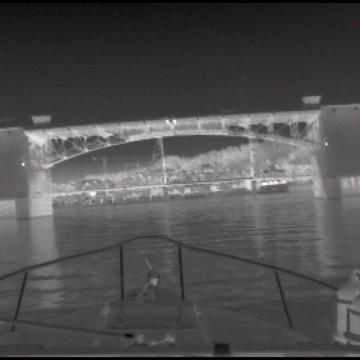
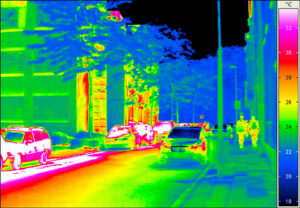
Thermal cameras as a solution can reduce a large part of the noise created by environmental conditions, especially in open spaces, and while reducing false alarms, make it easier for video content analysis (VCA) algorithms to identify and track the desired targets. One of the common misconceptions about video content analysis is the difficulty of identifying and recognizing a target. However, not recognizing targets that are not the person’s intention is perhaps more difficult than it is said; changes in light, rain, snow, growing plants, light reflections, shadows, etc. are among the things that are not important for people to identify. The best solution is to use thermal cameras along with video analytics. Thermal cameras are a perfect human detector; these cameras are capable of providing vision at very long distances, which is normal in the surrounding spaces; and they can ignore all the light changes that trigger false alarms in conventional cameras. Now, along with the sharp drop in the price of thermal images, the performance of these cameras has improved greatly Thermal cameras with video analytics have become the solution of choice for perimeter security.
The arrival of high-resolution thermal cameras has had a huge economic impact. High-resolution thermal cameras provide significant cost savings in protecting large areas. The key to unlocking this benefit is reduced infrastructure: poles, power supplies, and communications are among the most expensive parts of an outdoor system. By increasing the number of pixels, the reliable detection area for high-resolution thermal cameras increases. This allows you to use fewer cameras to secure an outdoor area.
Much effort has been put into providing good black and white images with all the visual details during the day and night, even in the presence of very bright sunlight, which has been very difficult for thermal cameras in the past. Thermal cameras are capable of providing a different level of detail to match a conventional HD camera. That is why the best approach in this regard is to combine a thermal camera with a TFor detectionT with a conventional camera TFor alarm assessmentT. Some thermal cameras are capable of automatically zooming and moving the HD PTZ camera on the detected target as the event occurs, which allows personnel to classify alarms accurately and quickly. By combining thermal detection cameras and conventional HD cameras that move automatically, people are provided with complete situational awareness of the entire environment.
Thermal cameras are excellent, the coverage range of thermal sensors provides information that is difficult to interpret in some cases; a swimmer wearing a wetsuit and a TglassT face mask reflects a little heat into the environment that the thermal camera is able to detect.
Using area sensitivity technology, security personnel can measure the amount of movement in different parts of the scene and focus with higher resolution on the areas that detect some kind of activity. Just like the human eye does. These personnel can increase the level of accuracy and, since they see movement patterns, they can The smallest changes in the thermal signature are detected.
The greater the distance covered, the more important it is to use and install the right system. The peripheral scenarios, for example in borderline conditions, are very difficult and difficult. Any vibration of the telescope will cause problems in the analysis of the video content. Therefore, the installation and use of the right stabilization solutions, both mechanically and in terms of the lens, is of great importance.
However, security systems are only one part of the equation. The other part of the equation is unauthorized persons who will do anything to avoid detection. These people take advantage of the darkness and bad weather to penetrate that environment. Thermal cameras can eliminate these factors to a large extent and, together with video content analysis (VCA), can increase the detection rate and provide accurate results.
Taken from a&s magazine