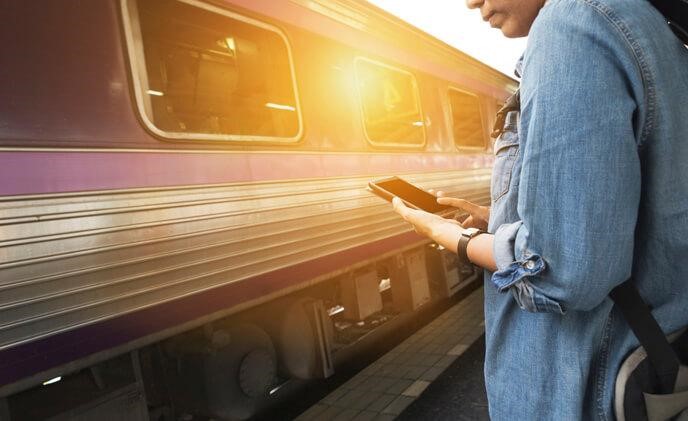

Railways are one of the most important types of transportation systems. However, with the increasing threat of terrorism and other criminal acts, these lines rely on technology to protect people and assets.
After the events of September 11, and more specifically in the wake of the attacks on the Madrid and London railway lines, people’s awareness of the terrorist threat to public transportation systems and the risks inherent to this type of transportation has increased. Given the dangers inherent in this environment and the limited tools available to prevent these attacks, managers must harness the power of technology to detect threats and prevent attacks before they occur.
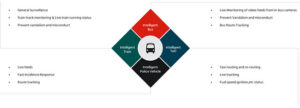
Fortunately, these managers have greater access to data than ever before, helping them do just that. The use of big data has become increasingly important in maintaining a high level of security in transportation spaces. Data analysis allows officials to identify the most important information needed to help reduce risk, manage critical situations, and use the information and data at their disposal to investigate and resolve incidents.
Videos – The Main Source of Data
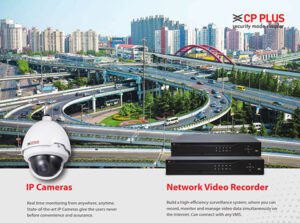
Videos captured by network cameras installed throughout a facility continue to be the most important data that helps operators achieve their security goals. But how to turn this vast amount of video data into actionable intelligence has become a major challenge – information that helps operators prevent, handle, and respond to an incident. This is where analytics software comes in, tools that alert operators to unusual and irregular conditions.
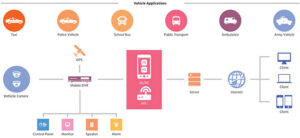 Nearly 90 percent of the activity captured by video surveillance systems is not very useful, but deleting it can be a problem – what happens when security teams need to search through that footage? Without high-performance video intelligence and video analytics (either built into the device or provided separately from a third-party vendor), classifying and analyzing captured video footage remains a daunting task. By putting cameras under security networks to capture video and stills, the capabilities of a VMS system can now be enhanced with the help of emerging analytics features; combining these features provides features such as people counting, traffic flow, engagement rate and video tracking. Benefits include the ability to search and identify people wearing blue or select people walking in a specific direction (even if they are running or moving faster than the flow of traffic). In a subway or train station, video analytics allow security operators to define “spots” to watch and ensure that passengers do not cross or skip those areas. With the help of analytics, Tripwire detection systems can be installed to quickly receive alerts when people cross defined lines or restricted areas, and to activate many “event” features.

In addition to managing incidents as they occur, video data is also needed for post-event investigations. Thanks to advances in compression and storage technologies, videos can be stored for longer periods of time, helping operators in this regard.
In recent years, there have been significant advances in the quality of video surveillance images and video storage, enabling railway stations to record hours of high-quality video. These recorded videos play an important role in identifying criminal acts, as well as in reassuring the relevant parties, and helping the relevant authorities to follow up on cases more easily.
Taken from a magazine