
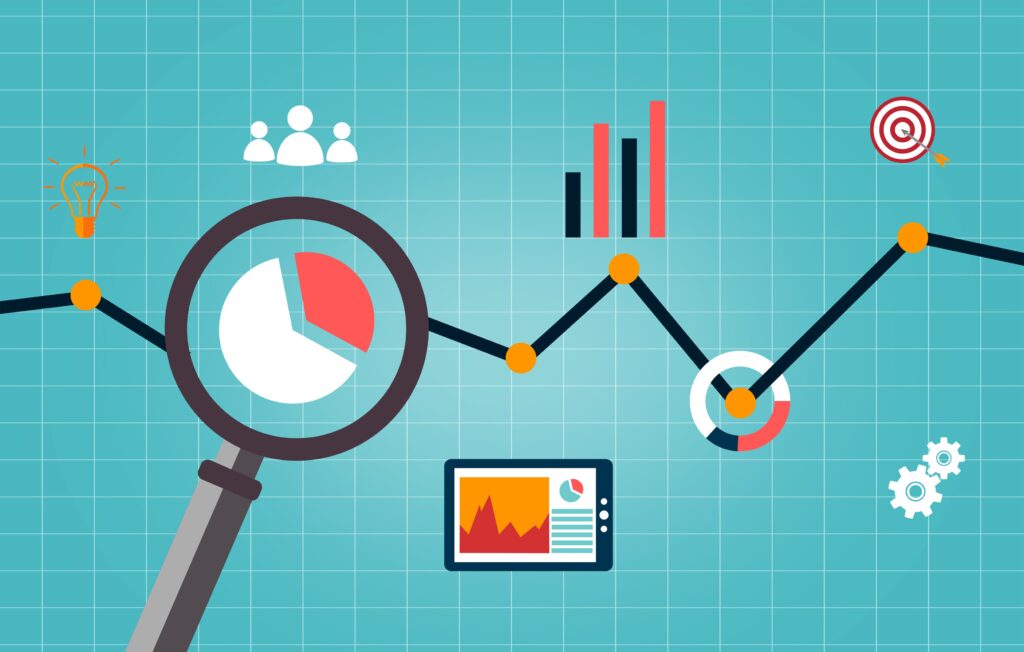
Data analytics is a powerful tool that can be used to predict events, gather information, respond to emergencies, and more.
The impact of data analytics on businesses and organizations across the country cannot be ignored.
Advances in technology have provided organizations with a wealth of information that can help them make smarter decisions and draw more informed conclusions.
As more and more executives realize the value of investing in analytics, more companies are embracing solutions that make everyone’s jobs easier. These solutions can analyze audio, images, and video to identify patterns, anomalies, and everything in between.
Campus Safety recently interviewed a video analytics expert, who we’ll discuss in more detail later in this article.
CS Magazine: How have advances in technology changed the way we collect data?
Expert: Two things are happening now: On the one hand, sensor technology is getting smarter and more accurate. For example, loud noise detectors used to be ineffective because the grinding noise of wheels would trigger them and cause a lot of false alarms. Today, most people are using dual-sensor technology, where one sensor can confirm the other, eliminating the problem of the previous sensors. On the other hand, there’s the big data revolution; with this revolution, the processing power of computers has become such that more information can be obtained from the data they already have. So by having the ability to process data on the one hand and smart sensors on the other, and by putting these two together, you have more usable information than ever before.
CS Magazine: Which of the collected data segments do you think is most useful for institutions?
Expert: If you want to examine the highest level of usefulness of information in one segment, such a service would be very risky. Like a mass transit system where I am watching the faces of all the people passing through a narrow space like revolving doors, then I will be able to obtain a large amount of information from these people. Or maybe this information is inside a data center where there is very valuable information and legal requirements and only certain people are allowed to enter it, so in this case you will be using a very valuable service. Facial recognition systems have come a long way. There are currently many identity recognition systems that are very powerful. Iris scanning, palm geometry, fingerprints, they are all among these identification systems, and for example, if you take a trip to Disney World, they will scan your fingerprints there. Even our smartphones have fingerprint reading capabilities, so we have come a long way in the field of identification, this capability of smartphones for us is just a sensor data, an identity verification device that allows us to use analytics to verify identity.
CS Magazine: In what other ways are existing institutions using data to improve security?
Expert: Everyone is trying to reduce the life cycle of events. So we are providing more capabilities in the field of event prediction, and if we cannot predict an event, at least we can be aware of it more quickly and deal with it with a high level of intelligence. In the past, people were forced to deal with situations like a shooter in a crowd, and there was a time lag between the incident and the response. Today, officials are responding quickly. The more information they have, whether through network cameras or other sensors, the better. Another point is the explosive growth of social media. Using social media mining services helps you get a picture of the interior of a place, which makes handling things smarter than in the past.
CS Magazine: What are the ways to analyze this volume of data?
Expert: Our main mission is to analyze data. This diverse information is taken into account and we try to understand it. By designing relationship-aware software that can understand information, instead of someone having to pull out a three-ring binder and say, “If there’s a shooter in the crowd, I need to do this or that,” everything is done automatically. So you can do your job very efficiently by looking at just a few things. Maybe you can go beyond physical security and look at other data. If you work at an airport and there’s ice on the runway, you can search and track that and determine when the truck came in and salted the ice. And finally, you can use video clips and recorded video images or even a general description and scan a surveillance system to find a match. All of these features are in a kind of analysis and
Data mining and data understanding are considered.
CS Magazine: What are the challenges for organizations to adopt this new technology?
Expert: There are two. One is the budget issue, so people don’t have the money to add this very advanced technology and they only add it when they need it. But there is a lot of competition between the available technologies. Until now, the amount of information that security professionals have was not available to ordinary people. You can benefit from data analysis and video analytics. But the other small thing is that there are bad guys who use similar technologies and use Google searches to figure out how to disrupt your access control system. So as security professionals, we have to embrace technology to stay ahead of those who are trying to overcome us.
CS Magazine: Do you have any advice for organizations on how to make the most of data analytics?
Expert: As a professional, I prefer to expand my perimeter. Everyone is used to using detection within a designated perimeter, so there are barriers to keeping outsiders out, but the reality is that your awareness has to go much further than the perimeter. Sometimes that means checking social media, sometimes that means using scanners to identify unauthorized people approaching your facility. Sometimes it’s just general intelligence and awareness of what’s going on. By paying close attention to the procedures in place, you’ll realize the value of all that information. If you’re not aware of what’s going on around you, it’s going to be very difficult to prevent what’s going on.
Taken from Campus Safety Magazine