
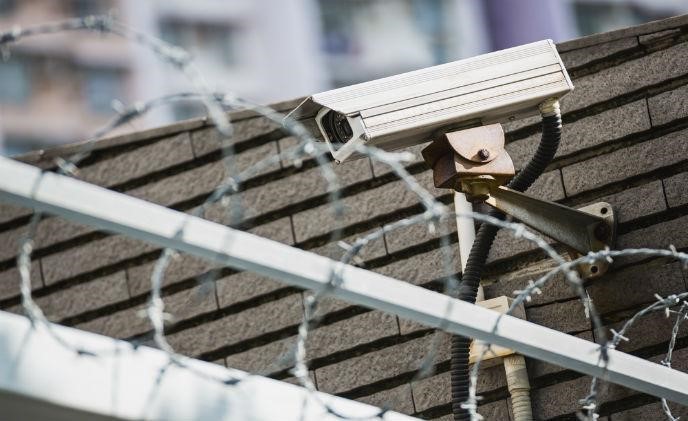

Environmental or perimeter identification in organizations, especially in critical facilities such as airports, refineries and military bases, is often considered the first line of defense. For operators, detecting and dealing with intruders has become a critical and vital issue. Today, video surveillance has become more advanced than ever before and is used for purposes such as detecting unauthorized entry and verifying events.
One of the great advantages of video is the ability to see events being detected. Advanced surveillance technologies generate fewer false alarms than conventional detection sensors; these alarms are caused by various factors such as weather and animal movement.
Vision is considered the most basic sense for humans, and thus it can be said that this is the sense that humans prefer and trust in over their other senses in emergency and dangerous situations. So even if another sensor starts to warn, humans look for some kind of visual or auditory confirmation to accept the warning as valid.
Using Cameras
The most important part of a video perimeter detection system is the camera, which can be either thermal or visual depending on the user’s use case. Video analytics work the same way with both thermal and visual cameras. However, for the user, nighttime and difficult weather detection may be more important than gathering details such as clothing color, facial features, or vehicle type. In such cases, users prefer thermal cameras to visual cameras. In cases where it is important to be able to see the details of the person/object in question, visual cameras may be a better option than thermal cameras.
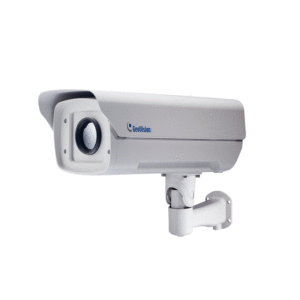
In many cases, visual and thermal cameras are used together. For example, detecting an object with a thermal camera triggers a PTZ camera to zoom in on the object. Using thermal cameras for detection and PTZ dome cameras for detection and visual information collection provides a great advantage for the first layer.
In terms of detection, thermal cameras usually provide better overall results for perimeter security applications. However, each installation should be evaluated individually to account for environmental and geographic factors. In many cases, visual cameras complement and assist thermal imaging devices in tasks such as detection, manual tracking, and environmental awareness.
Smarter than before
In the next step, with the help of video analytics, video images recorded by cameras are analyzed and, if certain predefined conditions are met, these analytics start sounding alarms. Today’s analytics have become smarter compared to the past and show more capabilities than just sounding alarms when an object enters a specific area. These analytics can limit alarms according to what is detected (which can be a person, animal or a car) or according to the action taken by them (for example, loitering, two people entering at the same time with an access card or dropping an object).
Other developments that have been made include the following:
- The ability to perform video analytics on all moving platforms, vehicles, drones, boats, and the ongoing process of combining intelligent video with other sensors to provide more powerful
- solutions such as radar, GPS, fences, bullet location detection, access control devices, and the Internet of Things (IoT)..
The availability of open-source neural networks has had an impact on the video surveillance market. Deep learning has specific applications for some types of video detection and has emerged as a factor in reducing the difficult conditions in these types of installations.
Depending on the application, video content analysis (VCA) can be performed on cameras, servers, or even edge boxes.
The difference between users usually stems from the level of sophistication they want for the detection algorithm or the desire to analyze higher resolution videos. Due to the limited space in the camera housing, VCA algorithms in the camera are limited by the processor speed, data throughput, and available memory. If you need very high-performance video algorithms, servers are considered the most financially sensible solution. Edge boxes are the second option that can be used between camera-centric and server-centric solutions. These devices are very small and have such strong environmental characteristics that they can be installed near the cameras, but are usually dedicated to video analytics. The computing power allocated to these devices allows them to be more capable in terms of algorithmic performance and data handling capacity.
Taken from a&s Magazine