
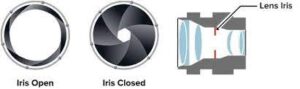
The camera aperture is the part of the camera that controls the amount of light that enters the lens. A larger aperture allows more light to pass through, while a smaller aperture allows less light to pass through. The light that the aperture allows in hits the image sensor, or receiver, and that light is recorded as electrical impulses that make up the video.
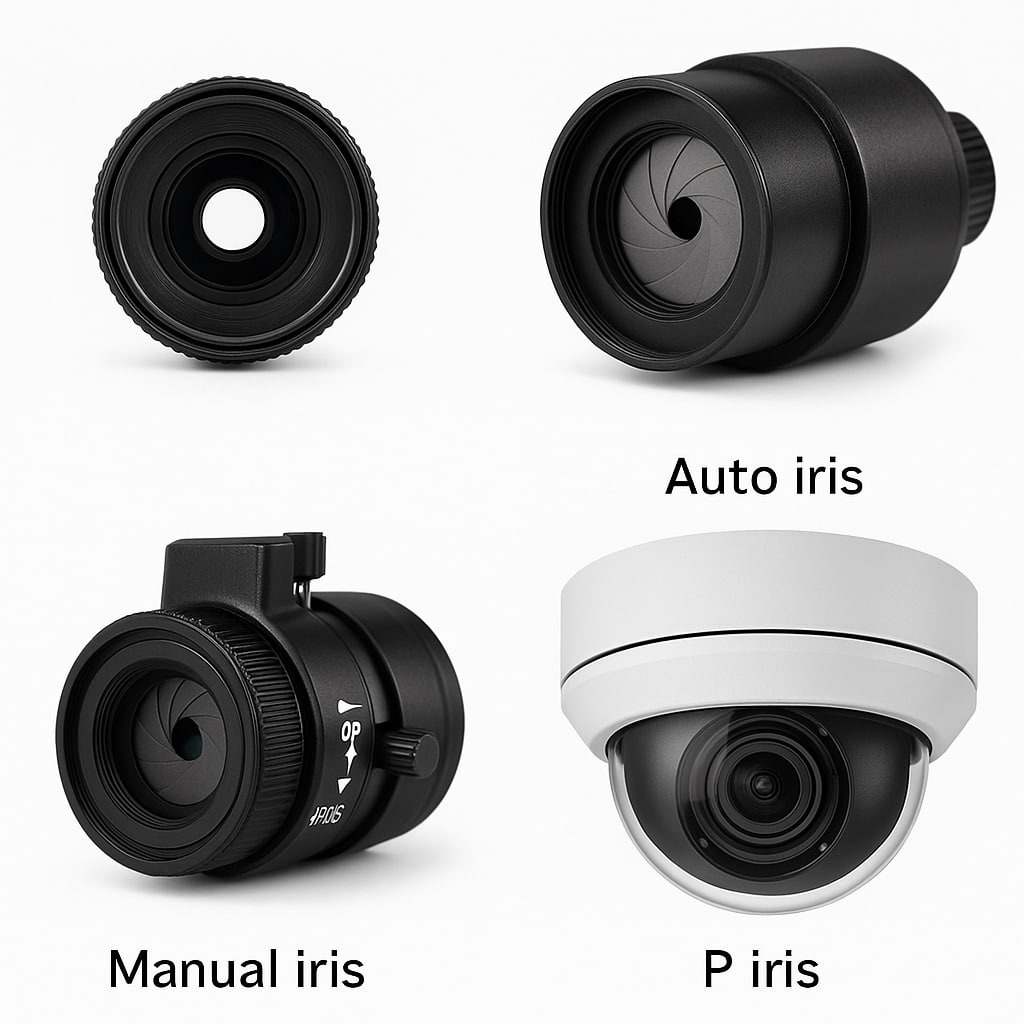
When it comes to IP surveillance camera video, there are several camera aperture options to choose from: fixed aperture, manual aperture, auto aperture, and P iris.
How a Camera’s Aperture Works
The aperture works by limiting the amount of light that hits the image sensor. Too much light can wash out your video, and too little light can make everything dark and gloomy, so it’s important to set your camera’s aperture to suit your location. Each of these four types of camera apertures works slightly differently, so choose the one that works best for you.
Fixed Aperture
With a fixed aperture, the opening that lets light into the camera cannot be adjusted. This type of aperture is ideal for recording in confined spaces where the light level remains constant while you’re recording, such as an office or school with lots of large overhead lights.
Manual Iris
With a manual iris, you can manually adjust the aperture to let more or less light into the camera. This adjustment is usually made during installation and when you have easy access to the camera. This type of iris is usually used in the same way as fixed irises, since if the camera is mounted in a hard-to-reach location, it may be difficult to access the camera after installation.
Automatic Iris
Automatic irises are motorized; having a motor allows the aperture to be adjusted automatically according to the changing light throughout the day. There are two types of automatic irises: DC irises (the motor control is inside the camera) and video irises (the control is inside the lens itself). Since automatic irises use more advanced technology than fixed or manual irises, cameras with automatic irises are often more expensive. Despite this price tag, these types of cameras are much better suited for recording outdoors, as they can automatically adjust for changes in daylight and nighttime conditions.
P Iris Aperture
The “P” in P Iris stands for “precise,” as this iris uses automatic adjustment like an automatic iris and controls within the camera’s software to provide much better video clarity and depth of field. The iris can only close to a certain point, which prevents blurry video; videos become blurry when an automatic iris overcorrects bright lights.
Additionally, P-iris cameras are more expensive than fixed and manual aperture models, but they are better suited for recording video in locations where light is constantly changing.
How can different camera apertures help you?
With four different aperture options to choose from, you can choose the network camera that best suits your surveillance needs.
Are you recording in an office building or only during business hours? A fixed or manual aperture works well with the uniform light from overhead lights, as these types of apertures don’t need to adjust to changing light levels.
Are you recording outdoors or 24/7? In these cases, your camera needs to adjust to both day and night light levels, and places like a parking garage or construction site are examples of these types of spaces. In such cases, your best choice is an automatic iris or P iris, as these types of irises are designed to work with constantly changing light levels. There is a wide range of different camera irises that the best manufacturers of video surveillance systems and IP network cameras equip their systems with.